How to Learn Affiliate Marketing and Build a Real Passive Income Stream
I spent years thinking affiliate marketing was a game for people with huge social followings or endless budgets. Every course I saw promised "six figures while you sleep" but rarely explained the actual mechanics. When I finally sat down to learn affiliate marketing properly, I realized the core skill is not persuasion or charisma. It is understanding how search engines decide what content deserves to rank, and then creating that content systematically.
This article walks through what that learning process actually looks like. It covers the tools, the trade-offs, and the practical steps that turn a side project into a steady source of passive income. No hype, no shortcuts. Just the real workflow that works when you have no audience and a limited budget.
Start With Niche Selection, Not Tools
Most beginners open an account with an affiliate network or join the Amazon Affiliate Program before they have a clear idea of what they will write about. That is backwards. Niche selection is the single decision that determines everything else: keyword research, content strategy, link building difficulty, and long-term earning potential.
A good niche has three things: enough products to promote, a target audience that searches for buying advice, and a level of competition you can realistically handle. A bad niche is one where the top results are all giant media sites with domain authority scores above 80. You do not want to compete with Forbes for a term like "best laptops." Instead, look for long-tail keywords where the top results are small blogs or forum threads. Those are the gaps you can fill.
I learned this the hard way. My first site tried to review fitness equipment. The market was saturated, and every product review I wrote got buried on page six of Google. When I switched to a narrower sub-niche, portable exercise gear for people who travel, the rankings came much faster. The search volume was lower, but the conversion rate was higher because the audience was actively looking for something specific.
The Core Skills You Actually Need
Once you pick a niche, you need three abilities: keyword research, content creation, and basic technical setup. That is it. You do not need to become a developer or a designer. You do not need influencer marketing skills. You need to understand how people search and how to answer their questions better than the existing results.

Keyword research starts with tools like Ahrefs or Semrush. You can also use Google Search Console if you already have a site with some data. The goal is to find queries that have decent monthly search volume and low competition. I usually look for terms with a keyword difficulty score under 30 and at least 50 searches per month. Those are the easiest to rank for, and they compound over time.
Content creation means writing product reviews, comparison guides, and informational articles. You do not need to be a professional writer. You need to be clear, honest, and thorough. A product review that covers pros, cons, use cases, and alternatives will outperform a thin list of features every time. Use ChatGPT to help with outlines or drafts, but always edit the final output. Readers can tell when a page was generated without any real thought behind it.
Technical Setup Without the Headaches
You need a content management system to publish your articles. WordPress is the standard choice, and it works well for affiliate sites. A managed WordPress host like WP Engine removes a lot of server maintenance. Install a basic SEO plugin, set up your permalink structure, and submit a sitemap through Google Search Console. That is about two hours of work, and then you never think about the technical side again.
Domain authority takes time to build. You cannot buy it. It comes from link building, getting other sites to link to your content. Start by writing guest posts on small blogs in your niche. Offer to write something useful, not promotional. Every backlink from a relevant site helps. Over six to twelve months, your domain authority will creep up, and your articles will start ranking for more competitive terms.
How to Learn Affiliate Marketing Without Getting Overwhelmed
The biggest mistake I see is people trying to learn affiliate marketing all at once. They sign up for three affiliate networks, buy five domain names, install ten plugins, and then burn out in a month. The better approach is to focus on one site, one niche, and one content format until you see results.
Write ten product reviews. Publish them on a consistent schedule. Monitor which ones get impressions in Google Search Console. Double down on the topics that get clicks. That feedback loop teaches you more than any course. The phrase "learn affiliate marketing" sounds like a single skill, but it is really a cycle of publishing, measuring, and refining. Each cycle makes your site stronger and your judgment sharper.
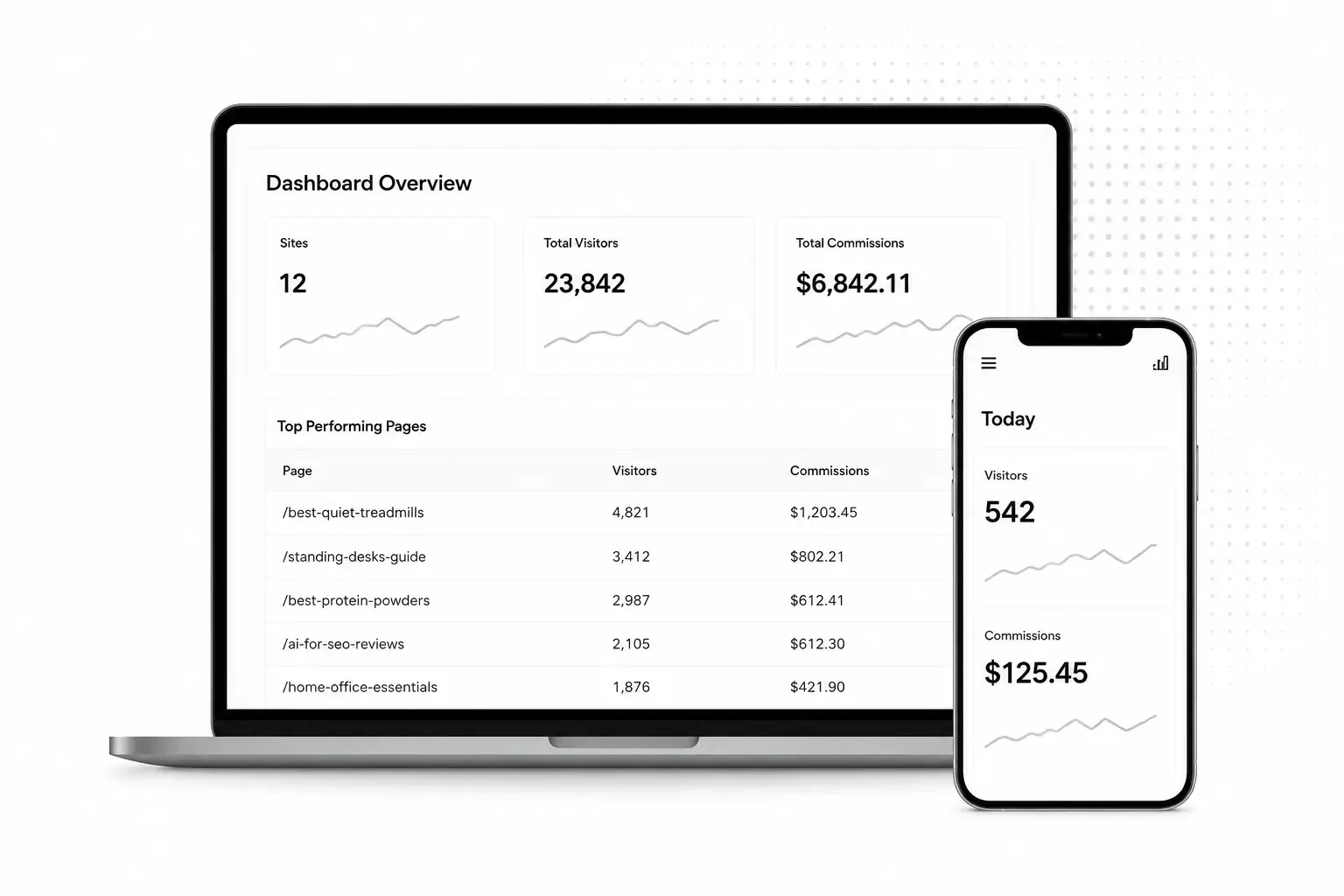
I remember my first three months of consistent writing. I had twenty articles, maybe a hundred visitors a day. Then one of my long-tail keyword articles jumped to position three. The commissions from the Amazon Affiliate Program started trickling in. That first fifty-dollar month felt bigger than any paycheck I had earned before, because it came without trading time for money.
Traffic Sources Beyond Google
SEO is the main channel for most affiliate sites, but it is not the only one. Pinterest, YouTube, and even Reddit can send organic traffic if you adapt your content to the platform. A product review that works as a blog post can also work as a short video or a Pinterest pin. The key is to repurpose, not rewrite.
That said, do not spread yourself thin. If you are just starting out, focus on one traffic source and master it. For most people, that is Google. The combination of keyword research, on-page SEO, and link building is the most reliable path to passive income. Other channels are bonuses you add later.
Affiliate Networks and Commission Structures
The Amazon Affiliate Program is the easiest to join, but its commission rates are relatively low. Other affiliate networks like ShareASale or Impact offer higher payouts for specific categories like software or luxury goods. The trade-off is that those networks often require approval from individual merchants, and some reject new sites with low traffic.
Start with Amazon to build momentum. Once your site has some content and a history of sales, apply to more selective programs. A single high-ticket affiliate offer, like a $500 software tool with a 30% commission, can earn more than a hundred small Amazon commissions. But you need the traffic and the credibility to get accepted.
Why "Learn Affiliate Marketing" Is a Process, Not a Destination
If you search for "how to learn affiliate marketing" online, you will find courses, ebooks, and YouTube tutorials. Most of them tell you the same basic steps. The difference between people who succeed and people who quit is not knowledge. It is consistency. Publishing one article a week for a year will teach you more than reading a hundred blog posts.
I have seen friends start affiliate sites, get excited for two weeks, and then abandon them when the traffic did not come overnight. The ones who kept going, even when each article only brought ten visitors, eventually built sites that earn thousands a month. The math is simple: if each article brings in ten dollars a month in commissions, one hundred articles brings in a thousand dollars. That is passive income from a library of content you wrote once.
The tools and platforms will change. AI writing assistants like ChatGPT will get better. Search algorithms will update. But the fundamental skill, understanding what your target audience needs and delivering it in a way that search engines can surface, will stay relevant. That is what it means to really learn affiliate marketing.

Practical Next Steps
If you are ready to start, here is a short checklist that cuts through the noise:
- Pick one niche where you have some firsthand knowledge or willingness to research deeply.
- Set up a WordPress site on a reliable host like WP Engine.
- Use Ahrefs or Semrush to find twenty long-tail keywords with low competition.
- Write a product review or informative post for each keyword. Aim for 1500 words minimum.
- Submit your sitemap to Google Search Console and start building backlinks through guest posts or outreach.
That is the entire playbook. Everything else is optimization. The sooner you start writing, the sooner you get feedback from real search traffic. That feedback is the best teacher.
Affiliate marketing is not a get-rich-quick scheme. It is a content business that rewards patience and attention to detail. If you put in the work, the passive income will follow. But the work has to come first.